Asazuke (Japanese Lightly Pickled Vegetables)
Colorful and crunchy vegetables are the star ingredients for my quick, simple Asazuke: Everyday Japanese Pickles recipe. These Japanese lightly pickled vegetables are ready in just 1 hour! Perfect for picnics, barbecues, or as a refreshing side dish, this recipe highlights the natural flavors of fresh produce while offering a delightful crunch.
Why You’ll Love This Recipe
- Quick Preparation: With just 15 minutes of prep time, you can have a delicious side ready in no time.
- Versatile Ingredients: Feel free to mix and match your favorite vegetables to create your unique version of Asazuke.
- Refreshing Flavor: The combination of salt and sugar creates a balanced flavor profile that enhances the natural taste of the vegetables.
- Health Benefits: Low in calories yet rich in fiber, these pickles make a nutritious addition to any meal.
- Perfect for Any Occasion: Whether it’s a weeknight dinner or a festive gathering, these pickles complement various cuisines and dishes.
Tools and Preparation
Before you start making Asazuke, gather the necessary tools to ensure smooth preparation.
Essential Tools and Equipment
- Digital kitchen scale
- Large mixing bowl
- Cutting board
- Sharp knife
Importance of Each Tool
- Digital kitchen scale: Helps measure ingredients accurately for consistent results every time.
- Large mixing bowl: Provides enough space to combine and mix all the ingredients without spilling.
- Cutting board: Offers a safe surface for chopping vegetables efficiently.
- Sharp knife: Aids in cutting through various vegetables cleanly for uniform pieces.
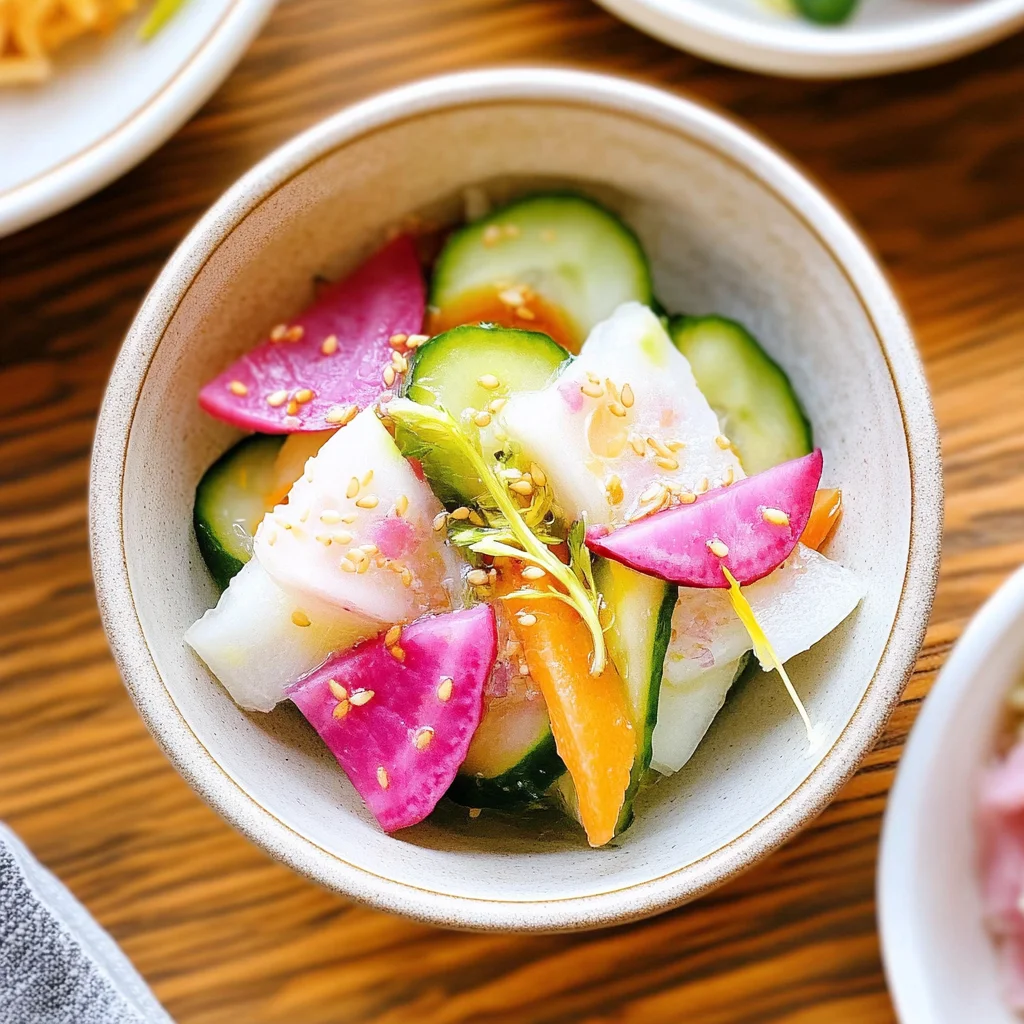
Ingredients
Here are the ingredients you’ll need to make your Asazuke (Japanese Lightly Pickled Vegetables):
For the Vegetables
- 4 leaves napa cabbage (11 oz, 300 g; or use green cabbage)
- 2 inches daikon radish (6 oz, 170 g; or use turnips or cauliflower)
- 1 Japanese or Persian cucumber (4.5 oz, 128 g)
- ½ watermelon radish (3.5 oz, 100 g; or use red radish)
- ⅓ carrot (1.6 oz, 45 g)
For the Pickling Mixture
- Diamond Crystal kosher salt
- ½ tsp sugar
- 1 piece kombu (dried kelp) (1 x 2 inches or 2.5 x 5 cm per piece)
Optional Add-ins
- 5 shiso leaves (perilla/ooba) (optional but best to include)
- Toasted sesame oil (for drizzling)
- Toasted white sesame seeds (for sprinkling)
- Yuzu zest (optional)
How to Make Asazuke (Japanese Lightly Pickled Vegetables)
Follow these easy steps to prepare your Asazuke:
Step 1: Prepare Your Ingredients
- Gather all your vegetables and wash them thoroughly.
- Cut the napa cabbage into bite-sized pieces.
- Peel the daikon radish and cut it into thin slices.
- Slice the cucumber into rounds or half-moons based on preference.
- Cut the watermelon radish into thin slices as well.
- Julienne the carrot into thin strips.
Step 2: Mix the Pickling Solution
- In your large mixing bowl, combine Diamond Crystal kosher salt with sugar.
- Add kombu to this mixture for an umami flavor boost.
Step 3: Combine Everything
- Add all prepared vegetables into the bowl with the pickling solution.
- Toss everything together until well-coated in the salt-sugar mixture.
Step 4: Let it Pickle
- Cover the bowl with plastic wrap or a lid.
- Allow it to sit at room temperature for at least 1 hour, or up to overnight for enhanced flavor.
Enjoy your bright and tangy Asazuke as a refreshing side dish!
How to Serve Asazuke (Japanese Lightly Pickled Vegetables)
Asazuke is a versatile dish that can enhance many meals with its refreshing crunch and tangy flavor. Here are some delightful ways to serve this Japanese pickle.
With Rice
- Serve Asazuke alongside steamed rice for a light and satisfying meal. The pickles contrast wonderfully with the warm rice.
In Bento Boxes
- Include Asazuke in your bento box as a colorful side. Its vibrant colors will make your lunch visually appealing.
As a Snack
- Enjoy Asazuke as a healthy snack between meals. The crunchy texture and tangy taste are perfect for satisfying cravings.
With Grilled Meat or Fish
- Pair Asazuke with grilled chicken, beef, or fish. The acidity of the pickles cuts through the richness of the meat, creating a balanced plate.
On Sandwiches or Wraps
- Add Asazuke to sandwiches or wraps for an extra layer of flavor. It provides a refreshing crunch that complements various fillings.
How to Perfect Asazuke (Japanese Lightly Pickled Vegetables)
Perfecting your Asazuke can elevate its taste and texture. Here are some tips to keep in mind.
-
Choose Fresh Vegetables: Use the freshest vegetables available for the best flavor and crunch. Look for vibrant colors and firm textures.
-
Adjust Salt Levels: If you prefer less salty pickles, reduce the amount of salt used in the recipe while still allowing enough for proper fermentation.
-
Experiment with Ingredients: Feel free to incorporate different vegetables like carrots or bell peppers to customize your mix based on personal preferences.
-
Add Flavor Boosters: Enhance your Asazuke by adding spices or herbs like chili flakes or garlic for an added kick of flavor.
-
Allow Adequate Pickling Time: For best results, allow your pickles to sit longer than one hour if you desire a stronger flavor profile. Overnight pickling can deepen flavors significantly.
Best Side Dishes for Asazuke (Japanese Lightly Pickled Vegetables)
Asazuke pairs beautifully with various side dishes, adding balance and variety to any meal. Here are some excellent options to consider:
-
Grilled Chicken: Juicy grilled chicken complements the tartness of Asazuke perfectly. Marinate it with soy sauce and ginger before grilling for added flavor.
-
Miso Soup: A warm bowl of miso soup adds comfort and depth to your meal, making it a classic pairing with Japanese pickles.
-
Steamed Broccoli: Lightly steamed broccoli provides a nutritious green option that pairs well with the tangy notes of Asazuke.
-
Teriyaki Tofu: Sweet and savory teriyaki tofu offers a plant-based alternative that balances well with the acidity of pickled vegetables.
-
Sushi Rolls: Include sushi rolls filled with fresh vegetables or shrimp as part of your spread; they pair beautifully with Asazuke’s crispness.
-
Japanese Potato Salad: Creamy potato salad brings richness to your meal, contrasting nicely against the crispness of the pickles.
Common Mistakes to Avoid
Pickling may seem simple, but there are common mistakes that can affect the flavor and texture of your Asazuke (Japanese Lightly Pickled Vegetables). Avoid these pitfalls for the best results.
- Boldly Skipping Salting: Not salting the vegetables before pickling can lead to soggy outcomes. Always sprinkle a bit of salt on the veggies to draw out moisture.
- Boldly Ignoring Time: Rushing the pickling process will yield bland vegetables. Ensure you let them pickle for at least 1 hour to develop flavor.
- Boldly Overlooking Quality Ingredients: Using subpar or wilted vegetables can compromise taste. Select fresh, vibrant produce for the best Asazuke experience.
- Boldly Forgetting Optional Add-ins: Neglecting optional ingredients like shiso leaves or yuzu zest limits flavor complexity. Experiment with these add-ins for a delicious twist.
- Boldly Misjudging Storage: Storing pickled vegetables improperly can spoil them quickly. Use airtight containers in the refrigerator to maintain freshness.
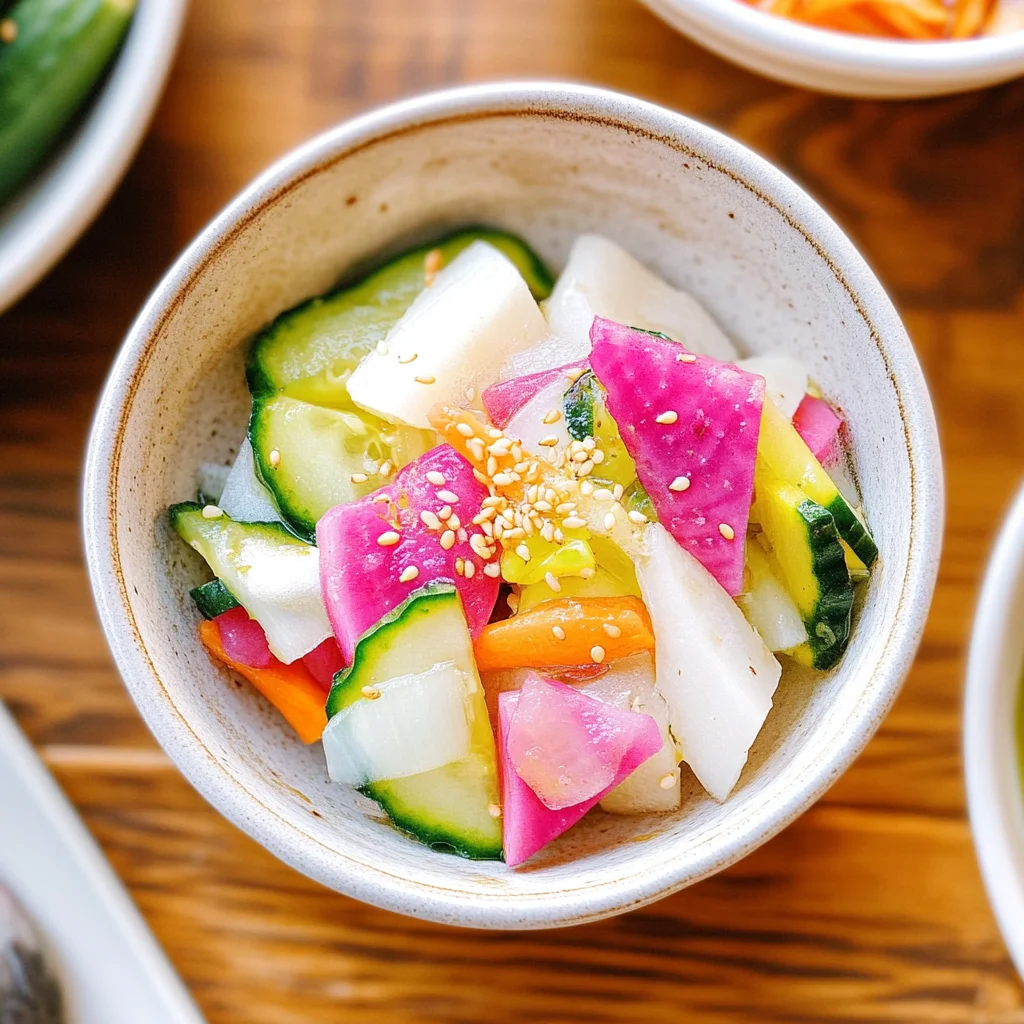
Storage & Reheating Instructions
Refrigerator Storage
- Store Asazuke in an airtight container to keep them crunchy and fresh.
- They are best consumed within 3-5 days for optimal taste.
Freezing Asazuke (Japanese Lightly Pickled Vegetables)
- Freezing is not recommended as it can alter the texture of the vegetables.
- If necessary, use freezer-safe containers and consume within 1 month.
Reheating Asazuke (Japanese Lightly Pickled Vegetables)
- Oven: Preheat to low heat and warm gently to avoid cooking the vegetables.
- Microwave: Heat in short bursts on low power, stirring frequently until just warmed.
- Stovetop: Place in a pan over low heat, stirring occasionally without cooking through.
Frequently Asked Questions
Here are some common questions about preparing Asazuke (Japanese Lightly Pickled Vegetables).
What is Asazuke (Japanese Lightly Pickled Vegetables)?
Asazuke refers to lightly pickled vegetables that are quick and easy to prepare. They offer a refreshing crunch and vibrant flavors.
How long does it take to make Asazuke?
The preparation time is about 15 minutes, but they need at least 1 hour of pickling time for the flavors to develop fully.
Can I customize my Asazuke?
Absolutely! You can add different vegetables or spices according to your preferences. Try incorporating radishes or unique herbs for variation.
What types of vinegar work best for Asazuke?
Rice vinegar is commonly used due to its mild taste, but you can experiment with apple cider or other light vinegars for a twist.
Final Thoughts
Asazuke (Japanese Lightly Pickled Vegetables) are a delightful addition to any meal. Their colorful presentation and crisp texture make them not only appealing but also versatile. Feel free to customize these pickles by adding your favorite vegetables or garnishes like sesame seeds or citrus zest. Enjoy this refreshing dish as a side or snack!
Asazuke (Japanese Lightly Pickled Vegetables)
Enjoy flavorful Asazuke (Japanese Lightly Pickled Vegetables) ready in just 1 hour! Try this quick recipe today for a refreshing side dish!
- Prep Time: 15 minutes
- Cook Time: 1 hour
- Total Time: 1 hour 15 minutes
- Yield: Approximately 4 servings 1x
- Category: Side Dish
- Method: Pickling
- Cuisine: Japanese
Ingredients
- 4 leaves napa cabbage (or use green cabbage)
- 2 inches daikon radish (or use turnips or cauliflower)
- 1 Japanese or Persian cucumber
- ½ watermelon radish (or use red radish)
- ⅓ carrot
- Diamond Crystal kosher salt
- ½ tsp sugar
- 1 piece kombu (dried kelp)
Instructions
- Wash and chop the vegetables into bite-sized pieces.
- In a large mixing bowl, combine Diamond Crystal kosher salt and sugar.
- Add kombu for enhanced flavor.
- Toss the prepared vegetables with the salt-sugar mixture until evenly coated.
- Cover and let sit at room temperature for at least 1 hour, or up to overnight for deeper flavor.
Nutrition
- Serving Size: 1 cup (150g)
- Calories: 45
- Sugar: 3g
- Sodium: 480mg
- Fat: 0g
- Saturated Fat: 0g
- Unsaturated Fat: 0g
- Trans Fat: 0g
- Carbohydrates: 10g
- Fiber: 3g
- Protein: 2g
- Cholesterol: 0mg